
Welcome to the knowledge base. Here we try to answer some the questions that will help you decide on the correct products for your application and explain where and when to use them. You will find technical details and guides to various products for containers and equipment.
Which Desiccant should I use?
There are various types of Desiccant materials that are used in the protection of equipment and containers and it is important to choose the correct one, otherwise it can lead to your product not being protected to the level or standard you require.
The most common desiccant materials used in the protection of equipment are Silica Gel and Molecular Sieves. If you are only considering desiccant for packaging applications, then you may also want to think about the use of activated clay. Primarily, we are going to look at protecting equipment’s although many of the points raised will also be relevant to the packaging of the same items.
Silica Gel
Beaded Silica Gel desiccant is the most common used desiccant material. It is the main desiccant used within desiccant bags for the protection of nearly all electrical items that you may purchase, as well as many clothing and textiles. Beaded Silica Gel has a pore size of up to 200 angstroms, which means it can adsorb many different molecules including moisture. However, a drawback of beaded silica gel is that it will not be selective in what molecules it will adsorb and so will adsorb the first molecules in comes in contact with, unlike molecular sieve desiccant which is highly selective and has a high polar preference for moisture compared to silica gel.
Silica gel has a typical adsorption capacity of 30% by weight, at temperature levels around 20 degrees Celsius and humidity’s of 40% to 50%RH. However, its adsorption capacity is vastly reduced at the extremes of temperature and can also begin to release moisture at temperatures of 70 degrees Celsius and above. Therefore, it is not recommended for applications with extremes of temperature.
Under static adsorption conditions Silica Gel will dry down to levels of -20 to -30 dewpoint, which is around 300 to 1,000ppm, which is usually dry enough for most electronic applications. Silica Gel can also be regenerated at temperatures of 120 degrees C, although it is important to note that any chemicals other than moisture that are adsorbed by the desiccant, will be released during reactivation.
Did you know? A single gram of desiccant has an equivalent surface area of 700m2. Hard to imagine?
Then try this: if your office measures 5m x 12m, then it is equal to just one-tenth or a gram of desiccant!
To visualise the amazing power of just 1 g of Arcadia desiccant, consider 1000 sugar cubes randomly bound together and then add all the surface areas to give a huge volume to surface area ratio.
Molecular Sieves.
Beaded Molecular Sieve desiccant is more widely used now than it was 30 years ago. The most common application is in the dual pane window or double-glazing industry, which replaced silica gel many years ago. Unlike Silica Gel, Molecular Sieve can be manufactured with a specific pore size, the most standard sizes are 3A, 4A, 5A and 10A (more commonly called 13X). This allows molecular sieves to be very selective in the size of molecules that it will adsorb. Grade 3A molecular sieve desiccant will only adsorb molecules of 3 Angstroms or smaller, 4A will only adsorb molecules of 4 Angstroms or smaller and so on through the grades. This selectivity means that Molecular Sieves can be used for adsorbing specific chemicals and tailored to unique applications.
Molecular Sieve has a typical adsorption capacity of 18-22% (depending on the Angstrom size) by weight at temperature levels around 20 degrees Celsius and humidity’s of 40-50% RH, which is lower than that of silica gel. However, at the extremes of temperature Molecular Sieves performs better and has a higher capacity to hold moisture than silica gel. Molecular sieves also have a very high polar preference for moisture over any other molecules, in fact if it has adsorbed any other chemical and then you introduce moisture, the other chemical will be released from the molecular sieves and the water molecule adsorbed in preference. In static adsorption applications molecular sieve can typically dry down to -30 to -40 degrees C dewpoints.
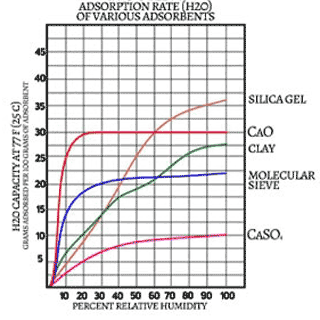
Molecular sieves have such a high polar preference to moisture that if you placed a saturated amount of silica gel desiccant in an enclosed stable environment and then added the same quantity of fresh, unsaturated molecular sieve desiccant. The molecular sieve will pull the moisture out of the silica gel and be adsorbed onto the molecular sieves, in essence drying the silica gel until it reached equilibrium.
Silica Gel and Molecular Sieves can be found in small granular forms as well and some powdered forms, but for general packaging applications and equipment the beaded form is more widely used, due to its uniform structure and resistance to attrition and thermal shock.
Activated Clay
Activated Clay is becoming a more widely used desiccant material for desiccant bags and packaging applications. This is due to its low carbon footprint and more environmentally friendly production and disposal. It is also the lower cost option compared to beaded silica gel and molecular sieves when looking at general packaging, but not advisable for using inside equipment’s. It is not usually used in pharmaceutical applications due to the risk of microbiological activity as it is directly mined from the ground. For pharmaceutical applications Silica Gel & Molecular Sieves are preferred.
Calcium Oxide
Calcium Oxide (CaO) is a salt that is vey often used for Container Desiccant applications, this is because it is a very aggressive moisture adsorber and has a much higher adsorption capacity than Silica Gel and Molecular Sieves. It will lower the dewpoint within a container to prevent the “Container Rain” and protect the products from moisture damage. This is a deliquescent product that changes from a granule to a liquid when it adsorbs moisture, therefore it is usually combined with starch inside a desiccant bag to adsorb the Calcium Sulphate liquid and turn into a gel. Due to the deliquescent nature of Calcium Oxide, it is not commonly used for other small general packaging applications. Calcium Oxide also does not create the very low dewpoints needed for critical electronic and optical device packaging; it can also be corrosive which is another reason it is not used in applications where the desiccant could come into close proximity to the equipment being protected.
Desiccant summary
In summary, for Electronic equipment we recommend using Silica Gel Desiccant as it has a high adsorption capacity over the mid-range temperature and humidity levels and can be regenerated at temperatures of 120 degrees Celsius. For bulk storage and container shipping applications, Calcium Oxide is the preferred option, and our Container Dri II product is best suited for this. For applications that contain electro-optics or just optics then molecular sieve desiccants should be used, for electronic applications that may have extremes of temperature then molecular sieves should be considered instead of silica gel also. Activated clay should be considered for general packaging applications along with silica gel desiccant bags.
Please contact us with any specific questions on desiccants and their uses.
Dry Gas Purging Methodology
Any Electronic, Electro-optical or Optical equipment will be susceptible to moisture ingress during its operational life and many of these equipment’s are fitted with Desiccators to adsorb that in coming moisture. However, all equipment will also contain a percentage of hygroscopic moisture that is already built inside the equipment. In order to remove this hygroscopic moisture, it is recommended to dry gas purge your equipment with either dry air or dry nitrogen before fitting any Desiccator, thus reducing the maintenance time and protecting your equipment for longer.
Arcadia have developed a range of dry gas purging systems called HydroPurge that can use both dry air and dry nitrogen to remove the hygroscopic moisture that is present within new build equipment.
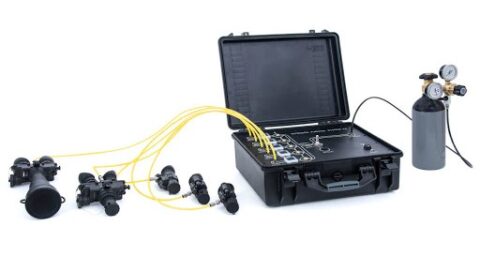 Hygroscopic moisture occurs within most components, only metal or glass will not hold moisture, although it may be present in any surface treatments such as paint. Generally, it is potting compounds, circuit boards and semi-conductors which will hold the most moisture. It is not uncommon to find equipment’s with a 4:1 ratio of hygroscopic moisture to moisture in the free air volume.
Nitrogen Gas Purging or Dry Air Gas Purging, which is better?
We are often asked whether you should use dry air or dry nitrogen for purging, so far as the gas is of sufficient dryness then is does not make a difference. However, if you are purging laser or optical cavities that must not contain oxygen, then in this instance you should be using dry nitrogen.
How long does a dry gas purge take?
Although the free air volume of an equipment will be dried within a few sweeps of gas, it is the hygroscopic moisture that will take longer to remove. All internal components within an equipment will hold different amounts of moisture and will release this moisture at different rates. This makes defining a purge time extremely difficult. It is also very important to determine what is a realistic and achievable dewpoint to dry your equipment down too as this will also affect your purge time.
How dry should I purge my equipment, and how dry should the gas be?
The level or dryness of your equipment will be essential to its survival and usage during its service life. Many people try to dry down to unrealistic dewpoint levels, many factors including the materials of construction can affect the optimum dryness level. The dryness of the gas should ideally be -60 degrees C dewpoint or better, as the dryer the gas the greater the vapour pressure differential you can create within the equipment to pull the moisture out and thus increase the purging process. Ideally if you are purging to a dewpoint of -30 degrees C within your equipment then the gas should be at least 10 degrees lower at -40 degrees C otherwise you will not reach your desired dewpoint. It is also to remember that if you over dry your equipment, you can be taking out moisture from important greases or lubricants that may stop working if your equipment is too dry.
A general guide to dewpoint levels for equipment is below.
Electronic -30 degree C dewpoint
Electro-optic -40 degree C dewpoint
Optical & laser -40 degree C dewpoint
How do I know how much desiccant to use within my equipment after purging?
There are several ways to determine the exact amount of desiccant you will require for the life of your equipment. This can be calculated from the materials of construction and o ring and gasket leak paths; it is also possible to use the HydroPurge equipment to establish the Moisture Vapour Transmission Rate (MVTR) of your equipment which in turn will allow you to calculate the desiccant required.
Please contact our technical team for further details on our range of dry gas purging systems and the MVTR testing and desiccant calculation software.
Which type of desiccator do I need?
There are a number of factors that you need to consider when deciding which type of Desiccator you require for your application other than which desiccant do I need? The most important question after deciding on the correct desiccant is whether you need a ‘Static’, ‘Breather’, or ‘Valved Desiccator’.
To answer this question, you need to consider how well sealed your equipment or enclosure is also how sensitive it is to pressure.
Static Desiccators
If you have an equipment that meets an IP65 rating or higher sealing configuration and it can withstand pressures or more than 7psi differential, you will be advised to use a ‘Static Desiccator’. A ‘Static Desiccator’ is a sealed unit containing desiccant, that will adsorb any moisture within your device and will adsorb any moisture that will ingress through the gaskets and seals your equipment/enclosures operational and storage life. Due to your equipment having a high IP Rating this style of desiccator will last longer and mean reduce maintenance times for your device or container.
Breather Desiccators
When you have an equipment or enclosure that is not fully sealed and has a physical leak rate, then you need to consider using a ‘Breather Desiccator’. The concept of using a ‘Breather Desiccator’ is that these Desiccators have allowable air flow both in and out of them (and your equipment/container), as the temperature and pressure changes during diurnal cycling of the weather. They create a controlled path of air which is greater than the leakrate of your device, thus ensuring any moisture entering will pass through the Breather Desiccator and the desiccant, so the wet incoming air will be dried before entering your equipment. If your equipment is also very sensitive to low pressure differentials, having a free breather ‘Breather Desiccator’ is advisable.
Valved Desiccators
These ‘Valved Desiccators’ are designed to be used for applications that are very well sealed and for which you would normally use a ‘Static Desiccator’, but have a requirement for air transportation or an airborne equipment that might exceed the maximum allowable pressure or vacuum within your equipment or container. The ‘Valve’ section of this assembly will have pressures settings that are fixed to open at a specific desired opening pressure to ensure your product is protected against both humidity and pressure differentials. Once the ‘Valve’ opens it will allow a flow of air in or out of your device and any incoming air will be dried as it passes through the desiccant within the ‘Valved Desiccator Cartridge’ behind the valve.
Prior to fitting any type of Desiccator, we would always recommend dry air purging or dry nitrogen purging your equipment or enclosure to maximise the life of the Desiccator that is being fitted. Please view details on our HydroPurge equipment for these dry gas purging requirements.
Why use Automatic Breather Valves?
Protecting equipment from the effects of pressure and vacuum as well as moisture in important when packaging anything from Electronics, Optics or larger equipment’s like engines or missiles. To protect these systems, they are usually placed in a storage or shipping containers that need to be sealed, these containers will be exposed to pressure and vacuum differentials due to changes in both altitude and temperature.
In order to overcome the problem of vacuum and pressure differentials, it is possible to use our Automatic Breather Valves. They are set at specific opening pressures so allow a controlled venting and adjusting of the container pressure with respect to the changes in environmental conditions. These Automatic Breather Valves reseal/close once they have vented all necessary pressure and return to their original pressure sealing level. They are fully repeatable and can be used continuously through the lifetime of the container. They will not completely equalise the pressure between the interior and the exterior of the container unless the valve has a manual override to allow for this.
In order to calculate the correct size of Automatic Breather Valve for your application it is essential to know the exact volume of air (when the container is empty) within the container. Knowing this value, it is possible to determine the maximum flowrate the valve needs to flow in order to expel all the air within the container, to ensure no deformation of damage occurs to the container or equipment inside.
Automatic Breather Valves also protect against Moisture, Sand and Dust as well as the effects of driving rain and in some cases high pressure wash downs. They will meet the SAE specification AS27166 and MIL-STD810 where applicable.
An Automatic Breather Valve can also be used when a container needs to survive submersion, the valve will not open if the reseal pressure of the valve is higher than the hydrostatic pressure of the water plus any vacuum that has built up within the container.
Our Technical team are on hand to be able to make the calculations and advise which is the most suitable valve for your specific application.
